





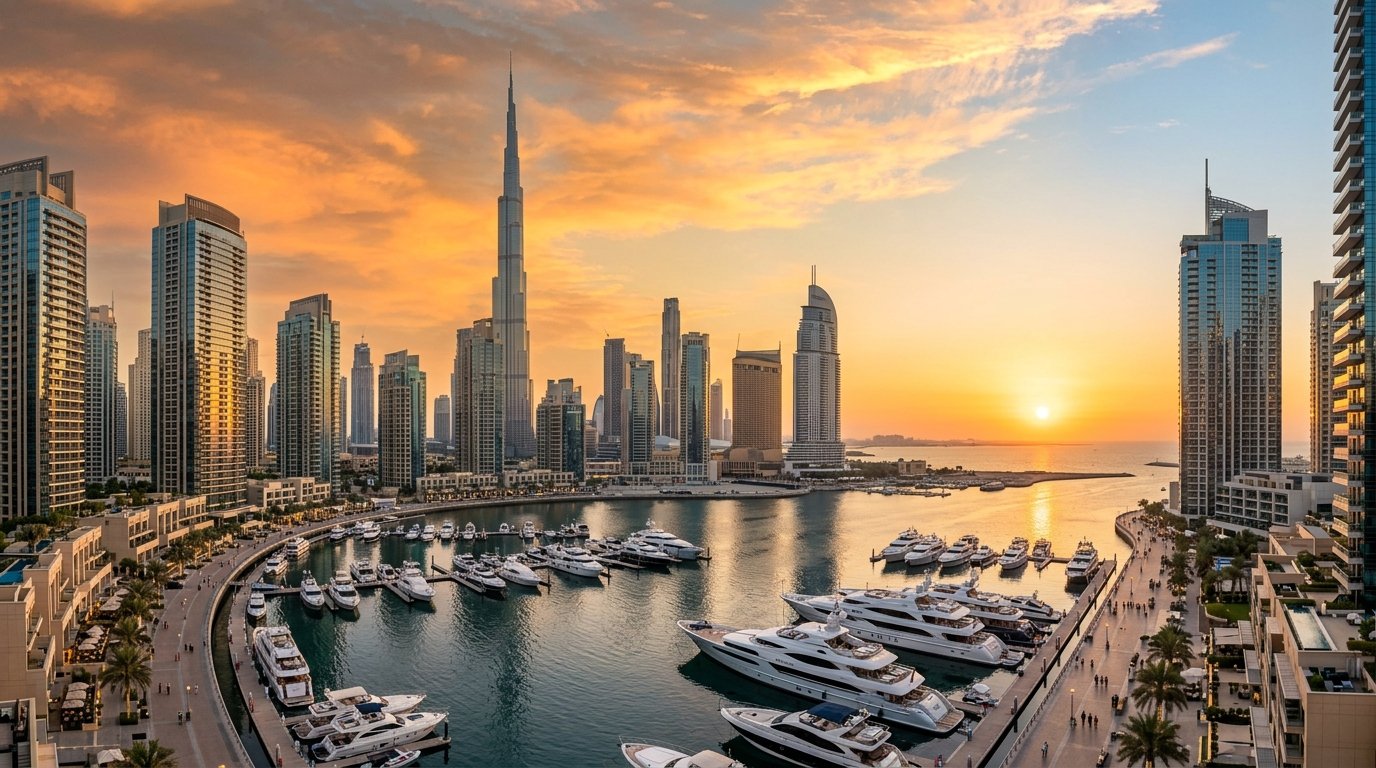
The Dubai real estate market is accelerating through a historic era of institutional expansion, regulatory maturity, and unprecedented global capital influx. As we navigate 2026, the emirate has definitively transitioned from an emerging regional trading hub into one of the three most influential wealth havens on Earth, standing shoulder to shoulder with London, New York, and Singapore. Driven by proactive federal economic initiatives, the visionary Dubai Economic Agenda (D33), progressive residency frameworks, and a completely zero-tax fiscal environment on personal income and capital appreciation, international high-net-worth individuals (HNWIs), family offices, sovereign funds, and private wealth managers are allocating unprecedented capital reserves into prime Dubai residential and commercial property assets.
Executive Summary: Dubai Property Market Performance & 2026 Strategic Outlook
Over the preceding 36 months, global macroeconomic instability, persistent inflationary pressures across Western economies, and shifting geopolitical alignments have underscored Dubai’s unique positioning as an unshakeable safe haven. In 2024 and 2025, Dubai Land Department (DLD) transaction volumes repeatedly obliterated all historical records, breaching AED 400 billion in annual real estate transactions and crossing 130,000 recorded deeds. Entering 2026, the underlying fundamentals of the market demonstrate remarkable structural resilience and organic, demographically supported momentum rather than speculative overheating.
Unlike previous real estate cycles observed in 2008 or 2014, today’s market dynamics are fundamentally anchored by cash-dominated acquisitions, strict statutory escrow account regulations under Law No. 8 of 2007, and permanent resident migrations. Recent transaction audits reveal that over 68% of residential acquisitions in Dubai are executed entirely with cash, eliminating systemic mortgage default contagion risks during global interest rate fluctuations. Prime residential capital values across trophy waterfront enclaves and branded residences have expanded by double-digit margins annually, while suburban villa and townhouse communities continue to experience severe supply deficits against surging executive expatriate immigration.
Key Market Indicators at a Glance (2025–2026 Projections)
- Overall Residential Capital Growth Forecast: Projected 8.5% to 14.2% across prime and ultra-prime micro-markets, led by waterfront master developments and low-density golf communities.
- Average Rental Yields: Ranging from 5.8% to 9.4% gross yields depending on community asset class and asset management strategy (short-term holiday homes versus long-term annual leases).
- Transaction Distribution: Approximately 62% off-plan development sales versus 38% secondary market ready handovers, driven by flexible developer milestone payment schedules.
- Net Inflow of High-Net-Worth Individuals: Over 6,500 millionaires relocated their primary residency and asset portfolios to the UAE in the past year alone, cementing sustained demand for properties exceeding AED 10 million ($2.72 million).
- Demographic Expansion: Dubai’s active resident population is expanding by an estimated 100,000 to 120,000 residents annually, pacing directly toward the target of 5.8 million residents established in the Dubai 2040 Urban Master Plan.
Macroeconomic Growth Drivers Fueling the 2026 Real Estate Expansion
To construct an accurate predictive forecast for Dubai property values in 2026 and beyond, institutional investors must analyze the broader macroeconomic pillars driving long-term capital allocation. Dubai does not operate in isolation; it operates as an agile, globally integrated financial ecosystem designed to capture international human talent and capital. The core structural pillars fueling this sustained expansion include:
1. The Dubai Economic Agenda (D33) Blueprint
Spearheaded by His Highness Sheikh Mohammed bin Rashid Al Maktoum, the D33 agenda aims to double the size of Dubai’s economy over the coming decade and establish the emirate among the top three economic cities globally. This strategy commits AED 32 trillion in economic output, doubling foreign trade through 400 foreign trade hub cities, and fostering innovation across advanced manufacturing, artificial intelligence, green logistics, and financial technology. The direct corollary of D33 is an escalating requirement for premium office space, executive housing, and luxury lifestyle residences to house international corporate headquarters, tech entrepreneurs, and asset management leadership.
2. Fiscal Sovereignty and Zero Personal Taxation
In an era where Western and European jurisdictions are dramatically increasing wealth taxes, capital gains taxes, non-domicile penalties, and top-bracket income levies, Dubai provides an unassailable fiscal shelter. There is strictly 0% personal income tax, 0% capital gains tax on property sales, 0% inheritance tax, and 0% property wealth tax. While a modest 9% federal corporate tax was introduced for business profits exceeding AED 375,000, passive personal real estate investments and individual capital gains remain completely exempt. This fiscal clarity produces an astronomical net return differential for international investors compared to London, Paris, Frankfurt, New York, or California.
3. Expanded 10-Year UAE Golden Visa Reforms
The landmark elimination of the mandatory minimum AED 1 million cash down payment requirement for real estate-linked Golden Visas has eliminated the final friction point for property buyers. Any individual investing an aggregate value of AED 2,000,000 ($544,500) or more across one or multiple freehold properties—whether purchased through cash, mortgage, or accredited off-plan payment plans—is now eligible for the coveted 10-Year Golden Visa. This grants complete residency independence, family sponsorship privileges, domestic staff sponsorship, and no minimum physical presence requirement inside the UAE to maintain visa validity.
4. Unmatched Safety, Infrastructure, and Global Connectivity
Ranked consistently among the five safest cities globally by Numbeo and international security indexes, Dubai offers an unmatched quality of life characterized by world-class healthcare, leading international IB and British curriculum schools, pristine public infrastructure, and Dubai International Airport (DXB) linking one-third of the world’s population within a four-hour flight radius. Furthermore, the multi-billion-dirham expansion of Al Maktoum International Airport (DWC)—set to become the largest airport on earth with a capacity of 260 million passengers across 400 gates—is igniting massive real estate appreciation throughout the Dubai South, Expo City, and Jebel Ali corridors.
Micro-Market Breakdown: Where to Invest in 2026 for High Yields and Capital Growth
Success in Dubai real estate in 2026 requires nuanced micro-market selection. The city is not a monolithic market; different master communities cater to vastly different investment objectives. Below is an authoritative breakdown of top-performing investment corridors categorized by strategic investor objectives.
Tier 1: Ultra-Luxury Waterfront Trophy Assets (Capital Preservation & Super-Prime Growth)
The ultra-luxury segment—defined as residences priced above AED 20 million ($5.45 million)—continues to experience intense global demand from billionaires, industrial titans, and tech founders seeking private coastal sanctums.
- Palm Jumeirah: The undisputed jewel of global luxury waterfront living. With virtually zero remaining vacant beachfront land, secondary villas and branded residences (such as Armani Beach Residences and Six Senses Residences) continue to command record-shattering prices exceeding AED 4,500 to AED 8,000 per square foot. Capital appreciation in Palm Jumeirah remains insulated by insurmountable geographic scarcity.
- Jumeirah Bay Island (Bulgari Island): The “Billionaire’s Island” of Dubai, home to the world-renowned Bulgari Resort and Marina. Average transacted square-foot values here consistently exceed AED 10,000 per sq. ft., representing the pinnacle of European and Middle Eastern private banking wealth consolidation.
- Palm Jebel Ali: Master-developed by Nakheel, Palm Jebel Ali is twice the physical size of Palm Jumeirah. Boasting over 110 kilometers of brand-new coastline, pristine crescent developments, and ultra-luxury private fronds, Palm Jebel Ali represents the single largest generational capital appreciation play for visionary long-term investors entering the market in 2026. Explore Nakheel’s iconic waterfront developments with Vintage Luxe.
- Dubai Islands (formerly Deira Islands): Nakheel’s master waterfront development bridging the historic Dubai Creek corridor with ultra-luxury beachfront resorts, golf courses, and marina residences. Entry pricing per square foot here represents a significant discount relative to Palm Jumeirah, offering dramatic upside potential as luxury infrastructure nears completion.
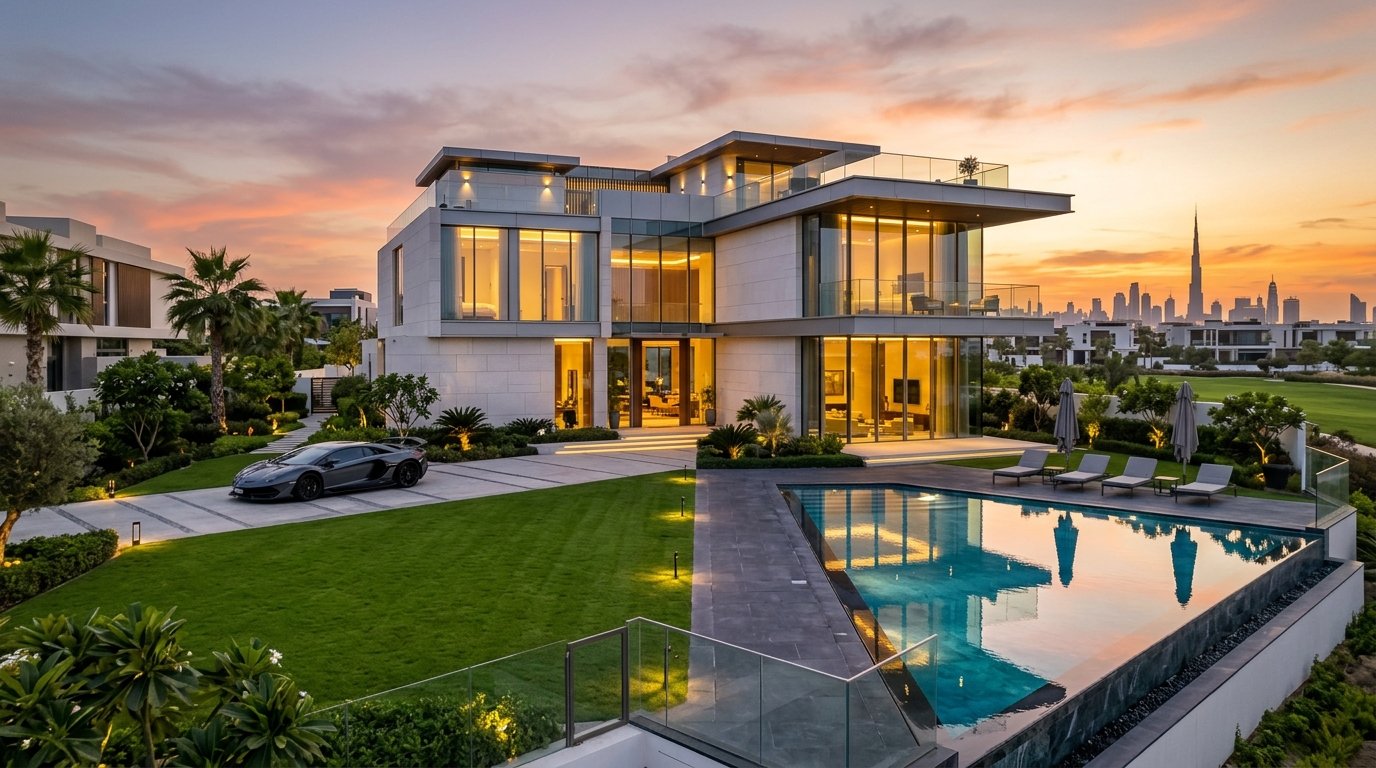
Tier 2: High-Yield Urban Apartment Corridors (Maximum Cash Flow & Rental Yields)
For institutional investors and private individuals focused on maximizing immediate cash-on-cash returns and net rental yields, Dubai’s urban business and lifestyle corridors deliver unmatched metrics globally.
- Downtown Dubai: Home to Burj Khalifa, Dubai Mall, and Dubai Opera, Downtown remains the heartbeat of the city’s tourism and executive lifestyle. Average gross rental yields for 1- and 2-bedroom units hover between 6.2% and 7.5%, with short-term holiday home operators capturing annualized net yields exceeding 9.5% during peak travel seasons from October through May. View premier Downtown residences by Emaar.
- Business Bay: Adjacent to Downtown Dubai and bordering the scenic Dubai Water Canal, Business Bay has transformed into a dynamic mixed-use lifestyle hub. Renowned developers like Binghatti, Omniyat, and DAMAC have introduced iconic branded towers. Gross yields in Business Bay consistently range from 7.0% to 8.4%, supported by strong corporate tenant demand from DIFC and Downtown finance professionals. Discover Binghatti architectural masterpieces in Business Bay.
- Dubai Creek Harbour: Master-developed entirely by Emaar Properties, this waterfront megaproject is designed as the modern ecological and architectural evolution of Downtown Dubai. With expansive pedestrian boardwalks, Central Park green belts, Marina yacht clubs, and unobstructed views of the Downtown skyline, Dubai Creek Harbour yields 6.8% to 7.8% gross with substantial long-term capital upside.
- Jumeirah Village Circle (JVC): Consistently ranking as the number-one community by total transaction volume month after month, JVC is the undisputed capital of rental yields in Dubai. With accessible capital entry points (studios starting around AED 550,000 and 1-bedroom apartments around AED 850,000), JVC delivers extraordinary gross yields between 8.2% and 10.1%, making it the premier target for cash-flow investors.
Tier 3: Master-Planned Suburban Family Communities (Long-Term Capital Growth & Tenant Stability)
Executive families relocating permanently to Dubai have created an unprecedented structural shortage of 3, 4, and 5-bedroom townhouses and independent villas. Communities with world-class international schools, green parks, and championship golf courses experience near-zero vacancy rates.
- Dubai Hills Estate: Often referred to as “the green heart of Dubai,” this flagship Emaar master community features an 18-hole championship golf course, King’s College Hospital, Dubai Hills Mall, and premier international academies. Villa capital values in Dubai Hills have appreciated over 65% since 2021, and demand from executive families continues to outstrip available resale inventory.
- Sobha Hartland & Sobha Hartland II: Developed by Sobha Realty in Mohammed Bin Rashid City (MBR City), Sobha Hartland stands out for its exceptional European construction quality, signature forest landscapes, and dual international schools (North London Collegiate School and Hartland International). Located just 10 minutes from Downtown, this community provides stable gross yields of 6.5% to 7.5% coupled with rapid capital appreciation. Explore Sobha Hartland forest villas and residences.
- Tilal Al Ghaf: Master-developed by Majid Al Futtaim around the stunning recreational Crystal Lagoon Al Ghaf. With signature neighborhoods like Elysian Mansions, Lanai Island, and Aura, Tilal Al Ghaf represents the benchmark of contemporary resort-style family living in suburban Dubai.
Comparative Community Data Table: Yields, Prices, and Appreciation Forecast
To assist your investment decision-making, our analytical team at Vintage Luxe has compiled the latest transactional data and 2026 performance benchmarks across Dubai’s most prominent freehold communities:
| Community Name | Dominant Property Type | Avg. Price / Sq. Ft. (AED) | Gross Rental Yield (%) | 3-Year Price Growth (%) | Recommended Investor Profile |
|---|---|---|---|---|---|
| Palm Jumeirah | Villas & Luxury Penthouses | AED 4,200 – 7,800 | 5.2% – 6.4% | +74% | Ultra-HNWI / Capital Preservation |
| Downtown Dubai | High-Rise Apartments | AED 2,600 – 4,500 | 6.4% – 7.6% | +48% | Balanced / Short-Term Rental |
| Business Bay | Branded Apartments & Penthouses | AED 1,950 – 3,200 | 7.2% – 8.6% | +52% | High Cash-Flow / Rental Income |
| Dubai Hills Estate | Villas, Townhouses & Apts | AED 1,850 – 2,900 | 6.2% – 7.4% | +68% | Family Long-Term / Capital Growth |
| Dubai Creek Harbour | Waterfront Modern Apts | AED 1,750 – 2,500 | 6.8% – 7.8% | +42% | Capital Appreciation / Urban Growth |
| Jumeirah Village Circle (JVC) | Mid-Market Apartments | AED 1,100 – 1,450 | 8.4% – 10.2% | +56% | Maximum Cash-on-Cash Return |
| Sobha Hartland (MBR City) | Forest Villas & Luxury Apts | AED 2,100 – 3,100 | 6.6% – 7.5% | +58% | Quality-Driven HNWI / Expat Living |
| Palm Jebel Ali | Ultra-Luxury Frond Villas | AED 3,200 – 5,500 | Expected 6.5%+ | New Launch (+35% est.) | Visionary Wealth / Off-Plan Upside |
| Dubai South (Expo City / DWC) | Affordable & Logistics Housing | AED 950 – 1,350 | 8.0% – 9.5% | +62% | Long-Term Airport Growth Catalyst |
| Tilal Al Ghaf | Lagoon Villas & Mansions | AED 1,900 – 3,400 | 6.0% – 7.0% | +64% | Resort Living / Executive Families |
Off-Plan vs. Secondary Market: Strategic Allocation in 2026
One of the most consequential decisions facing an investor entering the Dubai real estate market is whether to acquire an off-plan property directly from a master developer or purchase a ready secondary property on the open resale market. Both asset strategies offer distinct advantages, risk profiles, and return mechanics.
The Compelling Economics of Off-Plan Real Estate
In 2026, off-plan properties represent over 60% of total transactional market volume. The primary drivers that make off-plan developments irresistible to international investors include:
- Staggered Payment Schedules: Developers frequently offer investor-friendly milestone payment plans, such as 60/40, 70/30, or even post-handover payment plans spanning 1 to 3 years after project completion (e.g., 1% monthly payments). This allows investors to control prime real estate with an initial capital outlay as low as 10% to 20% down payment.
- Built-In Capital Appreciation During Construction: Historically, off-plan units purchased at initial launch phase (Phase 1 / VIP Launch) appreciate by 20% to 35% between initial ground-breaking and final key handover, delivering substantial paper equity gains before the property even generates its first dirham of rental income.
- Brand-New Design and Energy Efficiency: Contemporary buyers and high-paying tenants overwhelmingly prefer smart-home technology, floor-to-ceiling double-glazed acoustic glass, infinity pools, and EV charging infrastructure, which are standard in modern 2026 developments but often absent in 15-year-old legacy communities.
- Developer Warranties: Under UAE real estate legislation, developers are legally obligated to provide a 10-year structural warranty and a 1-year comprehensive defects liability period, shielding investors from unexpected capital expenditures post-handover.
RERA Escrow Account Protections: Why Off-Plan in Dubai Is Ultra-Secure
International buyers unfamiliar with Dubai’s regulatory architecture often ask: “What happens if the developer fails to complete the building?” In Dubai, buyer security is guaranteed by federal statute under Law No. 8 of 2007 (Escrow Account Law).
Every licensed developer must establish a dedicated, project-specific Escrow Account with an accredited UAE financial institution approved by the Dubai Land Department. All investor payments are deposited directly into this ring-fenced escrow account and cannot be accessed at the developer’s discretion. Funds are released strictly in staggered tranches validated by independent government-appointed engineers who physically inspect and certify construction completion milestones on site (e.g., 20% foundation, 40% superstructure, 60% MEP works, 80% facade, 100% completion). Furthermore, 5% of the total project value is held in escrow for a full year after completion to resolve any latent construction defects.
When Ready (Secondary) Property Makes Strategic Sense
Conversely, secondary market acquisitions are optimal for investors seeking:
- Immediate Cash Flow Generation: Ready properties can be leased to vetted long-term tenants or onboarded to luxury holiday home operators within days of title deed issuance, producing instant rental yields.
- Tangible Inspection and Physical Diligence: You can physically walk through the residence, inspect the natural lighting, evaluate the views, assess the quality of common area maintenance, and review actual historical service charges recorded in the DLD Mollak system.
- Immediate UAE Golden Visa Eligibility: If the ready property purchase price meets or exceeds AED 2,000,000, the investor receives an unencumbered Title Deed immediately upon transaction settlement, allowing instant initiation of the 10-year residency application without awaiting construction milestones.
Top Developer Spotlight: The Institutional Leaders Shaping Dubai’s Skyline
A critical determinant of real estate investment success in Dubai is developer credibility, financial solvency, and delivery track record. At Vintage Luxe, we advise our clients to concentrate capital with proven market leaders who maintain impeccable construction quality and timely handovers.
1. EMAAR Properties
The sovereign-backed titan of Middle Eastern real estate. Emaar is the master developer behind Burj Khalifa, Downtown Dubai, Dubai Marina, Dubai Hills Estate, and Dubai Creek Harbour. Investing with Emaar provides institutional-grade security, unmatched community governance, superior resale liquidity, and robust long-term capital preservation. Explore exclusive Emaar developments with Vintage Luxe.
2. NAKHEEL
The visionary master developer responsible for reshaping Dubai’s geography through Palm Jumeirah, The World Islands, and now the monumental Palm Jebel Ali and Dubai Islands. Backed by the Government of Dubai, Nakheel’s waterfront developments represent iconic global lifestyle addresses that command astronomical capital appreciation over multi-year holding horizons. View Nakheel waterfront projects.
3. SOBHA Realty
Globally renowned for its unique “backward integration” model—controlling design, engineering, materials manufacturing, and construction in-house—Sobha Realty delivers the absolute highest standard of interior finishing and structural craftsmanship in Dubai. Flagship developments like Sobha Hartland and Sobha SeaHaven offer investors elite craftsmanship and minimal maintenance liabilities. Discover Sobha Realty master residences.
4. BINGHATTI Developers
Dubai’s hyper-innovative luxury developer pioneering world-first branded residences in partnership with global luxury automotive and horological icons, including Bugatti Residences, Mercedes-Benz Places, and Jacob & Co Residences. Binghatti has earned an industry-leading reputation for blistering construction speeds, iconic geometric architecture, and exceptional return on investment across Business Bay, Downtown, and Al Jaddaf. Explore Binghatti branded towers.
5. Prestige One Developments & Boutique Luxury Creators
Emerging luxury boutique developers such as Prestige One, Ellington Properties, and Omniyat cater to discerning investors seeking curated architectural minimalism, biophilic design, resort-style amenity decks, and exclusive private residences with limited unit density. Learn more about Prestige One luxury projects.
Financing, Mortgages, and Currency Stability for Foreign Investors
A frequent misconception among international buyers is that Dubai real estate transactions require 100% cash up front, or that foreign non-residents cannot secure bank mortgages in the UAE. In reality, the UAE banking framework is highly accommodating to international property investors.
Currency Stability: The USD Pegged Advantage
The UAE Dirham (AED) has been strictly pegged to the United States Dollar (USD) at a fixed exchange rate of 3.6725 AED per 1 USD since 1997. For global investors holding US Dollars or dollar-denominated assets, investing in Dubai properties carries zero foreign exchange currency risk. Your asset value and rental dividends are effectively hard-dollar assets, providing a powerful hedge against depreciating domestic currencies across the UK (GBP), Eurozone (EUR), India (INR), South Africa (ZAR), and Latin America.
UAE Mortgage Rules for Non-Resident Foreigners
Under UAE Central Bank regulations, non-resident foreign investors can secure competitive mortgages from leading UAE commercial banks (including Emirates NBD, First Abu Dhabi Bank, Mashreq, and Dubai Islamic Bank) under the following parameters:
- Loan-to-Value (LTV) Ratio: Non-resident buyers are eligible for up to 50% to 60% LTV financing for residential purchases, requiring a 40% to 50% equity down payment. For UAE resident visa holders, the maximum LTV extends up to 80% for properties priced under AED 5 million.
- Mortgage Term: Repayment terms are available up to 25 years (capped at age 65 for salaried individuals or age 70 for self-employed business owners).
- Interest Rate Framework: UAE mortgages typically offer fixed introductory rates (ranging between 4.2% and 5.2% p.a.) for the initial 2 to 5 years, converting subsequently to a variable margin linked to the 3-month or 6-month EIBOR (Emirates Interbank Offered Rate).
- Off-Plan Mortgage Eligibility: Mortgages for off-plan properties are generally accessible once the building has achieved a minimum 50% certified construction milestone registered with RERA.
Regulatory Protections and Transparency: DLD, RERA, and Mollak
Dubai’s meteoric ascent to the top tier of global real estate destinations is fundamentally underpinned by its transparent, digitally integrated legal framework. The Dubai Land Department (DLD) and the Real Estate Regulatory Agency (RERA) have established consumer protections that rank among the most sophisticated in the world:
- Oqood Pre-Registration System: When purchasing an off-plan property, the transaction is formally registered on the government’s centralized Oqood portal, generating an official electronic title certificate that legally secures the buyer’s equitable ownership rights before construction completion.
- The Mollak Service Charge System: To protect property owners from arbitrary or inflated building service charges, RERA mandates that all home-owner maintenance fees must be calculated, audited, and approved directly through the digital Mollak system. Developers cannot arbitrarily raise service charges; every fil per square foot must be verified by certified third-party building auditors.
- RERA Smart Rental Index: RERA enforces a statutory Rental Dispute Center (RDC) and an algorithmic Smart Rental Index that governs maximum allowable annual rent increases. Landlords cannot unilaterally impose extortionate rent hikes upon existing tenants without satisfying RERA benchmark criteria, ensuring tenant stability and preventing market volatility.
- Ejari Tenancy Registration: Every residential and commercial lease executed in Dubai must be registered on the governmental Ejari platform. This provides complete contractual enforceability, transparent dispute resolution, and clear legal protections for both landlord and tenant.
Step-by-Step Acquisition Roadmap: How to Buy Dubai Property in 2026
Navigating a property acquisition in Dubai is remarkably streamlined, typically concluding within 7 to 14 business days for secondary cash transactions and within 24 to 48 hours for off-plan reservations. Here is the operational roadmap guided by Vintage Luxe Real Estate:
Stage 1: Portfolio Strategy & Community Matching
Define your core investment objective: Are you prioritizing capital appreciation, passive high cash-flow rental yields, or personal lifestyle relocation and Golden Visa qualification? Our licensed senior advisors analyze your target holding period, risk parameters, and cash allocation to present a shortlist of prime units matching your criteria.
Stage 2: Property Reservation & Formal Agreement
For off-plan acquisitions, the buyer reserves the preferred unit with a nominal booking deposit (typically AED 20,000 to AED 50,000, or 5% to 10% of purchase price) and signs the developer’s Reservation Agreement. For secondary market purchases, buyer and seller execute the standardized RERA Unified Contract F (Form F / Memorandum of Understanding), accompanied by a 10% security deposit cheque held in escrow by the registered broker.
Stage 3: Developer No Objection Certificate (NOC)
In secondary transactions, the seller applies to the master developer for a No Objection Certificate (NOC). The developer confirms that all historical service charges, utility fees, and community dues are paid in full, ensuring the buyer receives a completely clean, unencumbered asset.
Stage 4: Settlement at DLD Trustee Office & Title Deed Issuance
Both parties (or their legal power of attorney representatives) assemble at an accredited Dubai Land Department Registration Trustee Office. Purchase funds are settled via official UAE Manager’s Cheques or verified central bank wire transfers. Upon instantaneous verification, the DLD transfer registrar issues the new official, blockchain-authenticated electronic Title Deed bearing the buyer’s name.
Complete Transaction Cost Breakdown for Dubai Property Purchases
A crucial advantage of the Dubai real estate market is its absolute fee transparency. Unlike European markets where stamp duty, legal fees, and notary costs can add 12% to 15% to acquisition costs, Dubai’s one-time purchase expenses are clearly capped:
| Fee Item / Category | Statutory Amount / Rate | Paid To | Applies To |
|---|---|---|---|
| DLD Transfer Fee | 4.0% of Property Purchase Price | Dubai Land Department | All Purchases (Off-plan & Ready) |
| DLD Admin Fee | AED 580 (Off-plan) / AED 4,200 (Ready) | Dubai Land Department | Administrative Title Registration |
| Registration Trustee Fee | AED 4,000 + 5% VAT (properties > AED 500k) | DLD Trustee Office | Secondary Market Settlements |
| Real Estate Brokerage Fee | 2.0% + 5% VAT | Licensed Real Estate Agency | Secondary Resale Transactions |
| Developer NOC Fee | AED 500 – AED 5,000 | Master Developer | Secondary Market Resales |
| Mortgage Registration (if financed) | 0.25% of loan amount + AED 290 | Dubai Land Department | Mortgaged Acquisitions Only |
| Valuation Fee (if financed) | AED 2,500 – AED 3,500 + 5% VAT | Commercial Mortgage Bank | Mortgaged Acquisitions Only |
Frequently Asked Questions: Dubai Real Estate Investment 2026
Can foreign non-residents buy real estate in Dubai?
Yes. Under Law No. 7 of 2006, foreign nationals of any citizenship—whether resident in the UAE or living abroad—have the absolute legal right to acquire 100% freehold ownership in designated investment zones throughout Dubai, with full rights to sell, lease, gift, or inherit the property without restrictions.
What taxes apply to property investments in Dubai?
Dubai maintains a completely zero-tax regime on individual property investments. There are 0% personal income taxes on rental dividends, 0% capital gains taxes upon property disposition, and 0% annual municipal wealth taxes. The only government fee is the one-time 4% Dubai Land Department transfer fee paid at acquisition.
What is the minimum investment required for a UAE Golden Visa?
The statutory threshold for the 10-Year UAE Golden Visa is AED 2,000,000 ($544,500). This can be satisfied through a single property or an aggregate portfolio of multiple freehold properties. Mortgaged and off-plan properties are fully eligible subject to developer and bank NOC certifications.
What are typical service charges in Dubai master communities?
Service charges vary based on property type, amenities, and location. Standard suburban villa communities (such as Dubai Hills Estate or Arabian Ranches) range from AED 3 to AED 7 per square foot of built-up area annually. High-rise luxury towers in Downtown Dubai, Business Bay, and Dubai Marina typically range from AED 14 to AED 28 per sq. ft., inclusive of building security, concierge, maintenance, and recreational amenity operations approved through RERA’s Mollak portal.
How do I manage rental properties if I live overseas?
International owners utilize accredited Dubai property management firms such as Vintage Luxe. Our comprehensive asset management division oversees tenant screening, Ejari contract registration, rental cheque collections, maintenance coordination, and RERA dispute representations, depositing net rental income directly into your local or international bank account.
Is it safe to invest in off-plan properties in Dubai?
Dubai off-plan developments are among the most strictly regulated in the world. Developers cannot launch a project or accept client funds without government land ownership, 20% construction performance guarantees, and a ring-fenced RERA Escrow Account audited by the Dubai Land Department. Milestone payments are tied strictly to certified physical construction progress.
Conclusion & Strategic Advisory with Vintage Luxe Real Estate
As 2026 unfolds, Dubai’s real estate ecosystem stands out as an unparalleled beacon of growth, safety, and fiscal clarity in an uncertain world. Whether your strategic mandate targets generational wealth preservation in iconic waterfront estates, high-yielding urban residential towers, or high-growth off-plan opportunities along the Dubai South aerotropolis corridor, selecting the right assets with meticulous due diligence is essential.
At Vintage Luxe Real Estate, our elite advisory team combines real-time transactional data analytics, direct master developer allocations, and bespoke conveyancing support to curate high-performing real estate portfolios for global investors. Contact our senior advisory desk today to access exclusive off-market allocations, VIP developer launch pricing, and comprehensive Golden Visa consultation.
Connect with our investment specialists at Vintage Luxe Real Estate or explore our curated portfolio of luxury Dubai properties.



Comments are closed