





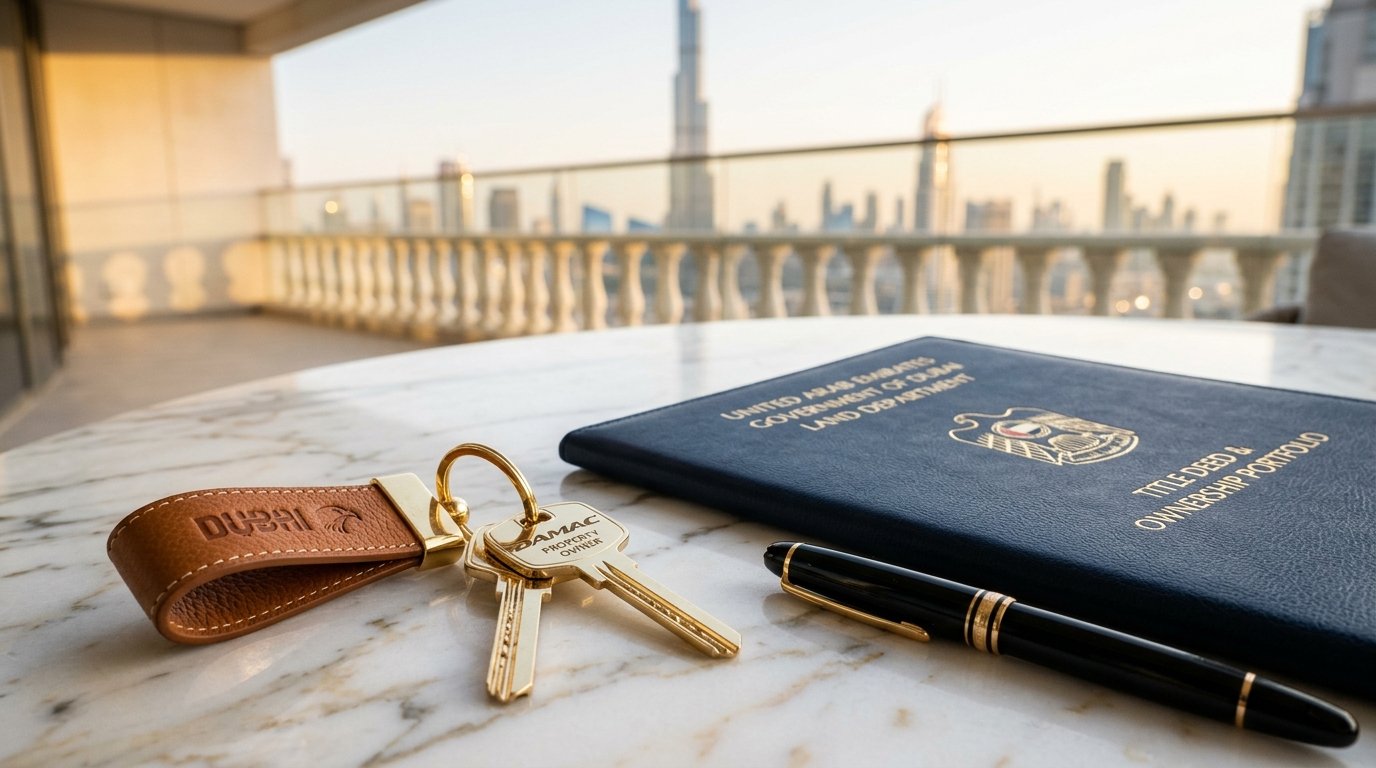
Dubai has established one of the world’s most accessible, transparent, and legally fortified real estate marketplaces for foreign investors. Contrary to historical misconceptions surrounding Middle Eastern property ownership, foreign nationals—regardless of citizenship, nationality, or country of residence—possess the unambiguous legal right to purchase, own, lease, mortgage, and bequeath real estate in Dubai on a 100% freehold basis. Governed by landmark statutory protections enacted under Dubai Law No. 7 of 2006, monitored by the Real Estate Regulatory Agency (RERA), and executed through the digital infrastructure of the Dubai Land Department (DLD), the acquisition process offers international capital allocators unparalleled security, zero personal taxation, and streamlined transaction timelines that outpace London, Paris, and New York.
Executive Overview: The Legal Architecture of Foreign Property Ownership
The turning point for Dubai’s real estate transformation occurred with the promulgation of Law No. 7 of 2006 Concerning Real Property Registration in the Emirate of Dubai. Prior to this historic legislation, foreign expatriates were largely restricted to short-term commercial leases. Law No. 7 established a clear, statutory demarcation: non-UAE and non-GCC nationals were formally granted the legal right to acquire absolute ownership rights (freehold), long-term usufruct rights (up to 99 years), and musataha rights over real property situated within geographically designated investment areas determined by the Ruler of Dubai.
In 2026, Dubai’s property framework stands among the most technologically advanced on earth. Title deeds are issued electronically on tamper-proof blockchain architecture, contracts are executed via government-regulated smart platforms, and financial transactions are sheltered by statutory escrow mechanisms. Whether you are an individual purchasing a secondary holiday home, a family establishing permanent tax residency, or an institutional fund assembling a diversified residential portfolio, navigating the legal nuances, financial line items, and conveyancing milestones is essential to executing a flawless transaction.
Freehold vs. Leasehold vs. Usufruct: Understanding Property Classifications
International buyers must distinguish between the primary legal tenures recognized under UAE real estate jurisprudence. Each tenure confers fundamentally different rights, responsibilities, and holding periods:
1. Freehold Ownership (Absolute Title)
Freehold ownership represents the highest tier of real property title available in Dubai. When you acquire a freehold property, you gain perpetual, unencumbered ownership of both the physical structure and the land upon which it stands. You receive an official Title Deed registered with the Dubai Land Department bearing your name. You enjoy the unconstrained right to reside in the property, lease it on long-term or short-term holiday home contracts, sell it on the open secondary market, mortgage it with accredited financial institutions, or transfer it to heirs through formal succession planning. There is no expiration date on freehold title.
2. Leasehold Ownership (Long-Term Term Tenancy)
Leasehold grants the purchaser the right to occupy, use, and enjoy the property for a specified contractual timeframe—customarily 30, 60, or up to 99 years. However, unlike freehold tenure, the underlying land remains the legal property of the freeholder or master landlord. Upon expiration of the leasehold term, ownership of the physical premises reverts to the freeholder unless an extension is mutually negotiated. Leasehold properties in Dubai are typically situated in older, non-designated master districts such as Deira, Bur Dubai, or parts of Al Barsha.
3. Usufruct and Musataha Rights
A usufruct right (governed by Articles 1333 to 1348 of the UAE Civil Code) grants the holder the legal right to use and harvest the financial benefits (such as rental income) of real estate owned by another party for up to 99 years, without altering the fundamental character of the property. A musataha right grants the holder the authority to construct buildings or develop infrastructure on land belonging to another entity for a term not exceeding 50 years, renewable by mutual consent. While common in institutional industrial and agricultural projects, individual foreign buyers overwhelmingly concentrate on pure freehold residential property.
Geographic Directory: Dubai’s Designated Freehold Investment Zones
Under regulatory decrees issued pursuant to Law No. 7 of 2006, specific sectors across Dubai are designated as Freehold Zones where foreign non-residents are legally authorized to hold title. Below is an exhaustive categorization of Dubai’s prime freehold investment corridors:
Prime Waterfront & Coastal Enclaves
- Palm Jumeirah: The world-renowned man-made archipelago offering super-prime beachfront villas, luxury penthouses, and branded hotel residences.
- Palm Jebel Ali: Nakheel’s monumental new waterfront megaproject featuring 110 kilometers of private coastline and ultra-luxury fronds. View Nakheel master developments.
- Dubai Marina: A dynamic high-density waterfront district housing over 200 residential towers, luxury yacht marinas, and the 7-kilometer Marina Walk.
- Jumeirah Beach Residence (JBR): A vibrant beachfront boulevard featuring 40 high-rise residential towers and private beach clubs.
- Dubai Islands: Master waterfront development across the northern coast featuring luxury resort residences, golf clubs, and marina slips.
- Jumeirah Bay Island (Bulgari Island): Exclusive low-density island sanctuary for billionaires, housing the Bulgari Resort, private yacht slips, and trophy mansions.
Central Urban & Financial Districts
- Downtown Dubai: The architectural and cultural epicenter of the emirate, master-developed by Emaar, home to Burj Khalifa, Dubai Mall, and Dubai Opera. Explore Downtown Dubai residences.
- Business Bay: The commercial and luxury residential corridor spanning the Dubai Water Canal, featuring high-rise towers by Binghatti, Omniyat, and DAMAC. Discover Binghatti towers in Business Bay.
- Dubai International Financial Centre (DIFC): The sovereign financial free zone operating under independent English common law, featuring elite residential penthouses and corporate headquarters.
- Dubai Creek Harbour: Emaar’s expansive ecological waterfront city featuring pedestrian promenades, marinas, and views of Downtown.
Suburban Family, Golf & Luxury Villa Communities
- Dubai Hills Estate: The benchmark master-planned family community centered around an 18-hole championship golf course, King’s College Hospital, and Dubai Hills Mall.
- Sobha Hartland & Sobha Hartland II: Ultra-luxury forest master communities in MBR City renowned for exceptional European construction craftsmanship. Explore Sobha Hartland residences.
- Arabian Ranches (I, II, and III): Established gated suburban villa communities renowned for lush green parks, community retail, and top British schools.
- Emirates Hills: The “Beverly Hills of Dubai,” an ultra-exclusive gated enclave overlooking the Montgomerie Golf Course, housing palatial private estates.
- Tilal Al Ghaf: Majid Al Futtaim’s premier resort-style master community centered around the crystal recreational Lagoon Al Ghaf.
- Jumeirah Golf Estates (JGE): World-class luxury golf community hosting the DP World Tour Championship across Earth and Fire courses.
- Jumeirah Village Circle (JVC) & Jumeirah Village Triangle (JVT): High-yield suburban apartment and townhouse hubs offering superior rental returns.
- Dubai South (Expo City & DWC Aerotropolis): High-growth master corridor surrounding the newly expanded Al Maktoum International Airport.
Non-Resident Permissions, Eligibility & Remote Acquisition via Digital POA
One of the most remarkable features of Dubai’s modern property market is that you do not need to be a resident of the UAE, hold an employment visa, or physically visit the country to acquire prime real estate. The entire transaction can be executed 100% remotely with absolute legal security:
1. Universal Foreign Eligibility
There are zero nationality quotas or citizenship restrictions for purchasing property in Dubai’s freehold zones. Whether you are a citizen of the United Kingdom, United States, Canada, India, China, Germany, Australia, France, South Africa, or any other nation, your legal capacity to hold property title is identical to that of a UAE national.
2. Remote Acquisitions for Off-Plan Developments
For off-plan purchases, master developers utilize secure digital onboarding portals. Contracts, Reservation Agreements, and Sales and Purchase Agreements (SPAs) are executed via authenticated DocuSign or Adobe Sign platforms. Identity verification is conducted via biometric passport scanning and secure video authentication. Booking deposits and installment payments are remitted directly via international SWIFT telegraphic transfers into the project’s RERA-monitored escrow account.
3. Remote Acquisitions for Secondary Market via Digital Power of Attorney (POA)
For secondary market transactions, an overseas buyer can grant a specific Real Estate Power of Attorney (POA) to a licensed conveyancing lawyer or Vintage Luxe representative. The Dubai Courts and Ministry of Justice provide an expedited digital notarization service via video call, allowing non-residents anywhere in the world to notarize a POA in under 20 minutes without visiting a local embassy. Your appointed legal representative attends the DLD Registration Trustee office on your behalf, executes the transfer, settles funds, and the electronic Title Deed is immediately dispatched directly to your personal email by the Dubai Land Department.
Conveyancing & Regulatory Contracts: Anatomy of RERA Forms A, B, and F
To eliminate informal agreements and protect market participants against fraud, the Real Estate Regulatory Agency (RERA) mandates standardized, digital contracts for all secondary property transactions in Dubai:
1. RERA Form A (Seller – Broker Agreement)
Executed strictly between the property seller and the appointed real estate brokerage. Form A establishes the broker’s formal authorization to market the property, confirms the agreed listing price, outlines marketing channels, and specifies the broker’s professional commission. Crucially, a broker cannot legally market or advertise any property in Dubai without an active Form A registered on the DLD Trakheesi system.
2. RERA Form B (Buyer – Broker Agreement)
Executed between the property purchaser and the buyer’s designated broker. Form B outlines the buyer’s search parameters, target budget, and the scope of advisory representation. It formalizes the fiduciary duty owed by the brokerage to the buyer, ensuring ethical representation throughout the negotiation and closing stages.
3. RERA Unified Contract F (Form F / Memorandum of Understanding)
Form F is the cornerstone contract governing secondary property transactions. It is a tri-partite legal agreement signed digitally by the buyer, seller, and certified brokers via the Dubai REST application. Contract F sets forth all binding contractual terms: exact financial purchase price, deposit amounts, mortgage clearance timelines, developer NOC deadlines, physical inspection dates, snagging rectification clauses, and financial penalties (typically 10% liquidated damages) should either party unlawfully breach the agreement.
Comprehensive Fee Breakdown: All Purchase Costs & Hidden Expenses
Understanding the exact financial requirements beyond the headline property price prevents budget overruns. In Dubai, transaction fees are clearly codified by law with zero unexpected municipal surcharges. Below is the complete schedule of closing costs:
| Expense Category | Statutory Amount / Formula | Payable To | Timing / Trigger |
|---|---|---|---|
| DLD Transfer Fee | 4.0% of Gross Property Value | Dubai Land Department | At time of transfer / SPA registration |
| DLD Administrative Fee | AED 580 (Off-Plan) / AED 4,200 (Ready) | Dubai Land Department | Title certificate issuance |
| Registration Trustee Office Fee | AED 4,000 + 5% VAT (properties > AED 500k) | DLD Trustee Office | Day of title deed transfer |
| Real Estate Agency Commission | 2.0% of Purchase Price + 5% VAT | Licensed Real Estate Broker | Secondary resale settlements |
| Developer NOC Fee | AED 500 to AED 5,000 + 5% VAT | Master Developer | Prior to transfer appointment |
| Independent Snagging / Inspection | AED 1,500 to AED 3,500 | Certified Inspection Company | Before handover / final settlement |
| Mortgage Registration (if financed) | 0.25% of loan amount + AED 290 | Dubai Land Department | Financed purchases only |
| Bank Mortgage Valuation Fee | AED 2,500 to AED 3,500 + 5% VAT | Commercial Mortgage Bank | Prior to final loan offer |
| Bank Arrangement Fee (if financed) | 0.5% to 1.0% of loan amount | Commercial Mortgage Bank | At mortgage loan acceptance |
| Conveyancing Legal Fee | AED 6,000 to AED 10,000 | Conveyancing Specialist | Throughout legal diligence |
As a rule of thumb, cash buyers purchasing secondary properties should budget approximately 6.5% to 7.0% above the purchase price to cover all government, trustee, brokerage, and conveyancing fees. For off-plan purchases, because developer agency commissions are paid entirely by the developer, buyers only pay the 4% DLD transfer fee and nominal administrative issuance charges.
Secondary Market Acquisition: Step-by-Step Purchase Roadmap
Acquiring a ready, secondary residential property in Dubai follows a standardized statutory procedure governed by the Real Estate Regulatory Agency (RERA). A typical cash acquisition takes approximately 10 to 14 business days from agreement to title handover:
Stage 1: Property Diligence & Title Verification
Once you select your target property, your Vintage Luxe broker requests an official Title Deed copy from the seller. Using the DLD REST smart verification portal, we verify title authenticity, ownership details, and confirm whether any existing bank mortgages or legal encumbrances are attached to the unit.
Stage 2: Execution of RERA Unified Contract F (MOU)
Buyer and seller execute the mandatory RERA Unified Contract F (Form F) through the official Dubai REST portal. This legally binding Memorandum of Understanding outlines the agreed purchase price, completion timeline, inclusions (furniture, appliances, parking allocations), and penalty clauses. Simultaneously, the buyer lodges a 10% security deposit via a Manager’s Cheque in the name of the seller, held in secure escrow custody by the certified brokerage agency until closing.
Stage 3: Mortgage Clearance & Liability Letters (If Applicable)
If the seller has an existing mortgage on the property, the seller’s bank issues an official liability letter. The buyer (or buyer’s bank) settles the outstanding mortgage balance to release the title deed from the bank’s security vault before final title transfer can take place.
Stage 4: Developer No Objection Certificate (NOC)
Both parties apply to the master developer (such as Emaar, Nakheel, or Damac) for an official No Objection Certificate. The developer conducts an audit confirming that all community service charges, district cooling fees, and building maintenance bills are settled to date. Once cleared, the developer issues the NOC authorizing the transfer of title to the buyer.
Stage 5: Final Settlement at DLD Registration Trustee Office
Buyer and seller convene at an official DLD Registration Trustee Office. The buyer delivers the purchase balance via a UAE Manager’s Cheque, settles the 4% DLD transfer fee, and pays the trustee administrative charge. The registrar verifies all documentation, registers the transaction on the central land registry, voids the seller’s title, and generates the new official electronic Title Deed in the buyer’s name. Keys and access cards are handed over immediately.
Off-Plan Property Acquisition: Step-by-Step Purchase Roadmap
Purchasing an off-plan property directly from a master developer is an exceptionally streamlined experience, especially for overseas international buyers:
Step 1: Project Allocation & VIP Unit Selection
During competitive developer launches, high-floor units and corner layouts sell out within minutes. As a premier agency, Vintage Luxe secures early VIP launch access, allowing you to review master layouts, floorplans, orientation, and price lists before public opening.
Step 2: Reservation & Booking Deposit
Once you select your unit, you execute the developer’s formal Reservation Agreement and pay an initial booking deposit (typically 5% to 10% of the property price, or a fixed amount such as AED 30,000 to AED 50,000) via credit card, bank transfer, or crypto-to-fiat payment gateway.
Step 3: Down Payment & DLD Fee Settlement
Within 14 to 30 days of booking, you remit the primary down payment (typically 10% to 20% of purchase price) along with the 4% DLD transfer fee directly into the developer’s registered project Escrow Account.
Step 4: Sales and Purchase Agreement (SPA) & Oqood Registration
The developer issues the comprehensive, multi-page Sales and Purchase Agreement (SPA). Both parties execute the contract digitally. The developer submits the SPA to the Dubai Land Department, which generates the official Oqood Pre-Registration Certificate confirming your equitable ownership of the off-plan unit.
Step 5: Construction Milestones & Key Handover
You pay milestone installments according to the construction schedule audited by RERA. Upon 100% building completion and issuance of the Building Completion Certificate (BCC) by Dubai Municipality, you conduct a professional snagging inspection, settle any final handover payments, and the DLD converts your Oqood certificate into a permanent Title Deed.
International Benchmark: Dubai vs. London, New York, Singapore & Paris
To demonstrate the fiscal and structural superiority of the Dubai property ecosystem for foreign investors, consider this direct comparison against leading global gateway cities:
| Global City | Property Transfer Tax / Stamp Duty | Annual Property / Wealth Tax | Personal Rental Income Tax | Capital Gains Tax | Typical Closing Timeline |
|---|---|---|---|---|---|
| Dubai (UAE) | 4.0% (One-time) | 0% | 0% | 0% | 7 to 14 Days |
| London (UK) | Up to 15% (SDLT + Non-Resident Surcharge) | Council Tax + ATED for corporate holdings | Up to 45% | Up to 24% | 8 to 16 Weeks |
| New York (USA) | Mansion Tax up to 3.9% + Transfer Taxes | Annual Real Estate Tax (~1.5% to 2.2%) | Up to 37% Federal + State & City Tax | Up to 20% + 3.8% NIIT | 6 to 10 Weeks |
| Singapore | 60% ABSD for foreign non-residents | Property Tax up to 32% of Annual Value | Progressive up to 24% | 0% | 8 to 12 Weeks |
| Paris (France) | ~7.5% Notaire & Registration Duty | IFI Wealth Tax on real estate > €1.3M | Up to 45% + Social Charges | Up to 36.2% | 10 to 14 Weeks |
International Fund Transfers, Currency Peg & AML Compliance
Moving capital across international borders requires an understanding of the UAE’s strict regulatory protocols regarding Anti-Money Laundering (AML) and Counter-Terrorism Financing (CFT):
1. The United States Dollar (USD) Currency Peg
The UAE Dirham (AED) has maintained a rigid peg to the US Dollar at 3.6725 AED per 1 USD since 1997. This eliminates foreign exchange volatility for global investors whose wealth is denominated in USD. International bank wire transfers remitted in USD are converted automatically at commercial banks at the fixed parity rate with negligible spreads.
2. Source of Funds & AML Verification
Under federal regulations supervised by the Central Bank of the UAE and the Ministry of Economy, all real estate transactions are subject to rigorous Know-Your-Customer (KYC) screening. International buyers must provide proof of Source of Funds (such as bank statements for the preceding 3 to 6 months, audited corporate dividends, property sale deeds, or business revenue verification). Compliance checks ensure that funds originate from legitimate, fully disclosed accounts in good standing.
3. Cryptocurrency-to-Fiat Transactions
Dubai is a recognized global hub for digital asset innovation under the Virtual Assets Regulatory Authority (VARA). While the Dubai Land Department accepts settlement payments only in fiat UAE Dirhams via official Manager’s Cheques, investors can utilize VARA-licensed digital asset brokerages in Dubai to convert Bitcoin (BTC), Ethereum (ETH), or stablecoins (USDT/USDC) into fiat Dirhams seamlessly. The licensed intermediary verifies AML compliance, liquidates the digital assets, and issues the official Manager’s Cheque payable to the developer or seller.
4. Asset Protection via DIFC & ADGM Corporate Holding Foundations
Ultra-high-net-worth investors frequently structure real estate acquisitions through Special Purpose Vehicles (SPVs) or Private Foundations established within the Dubai International Financial Centre (DIFC) or Abu Dhabi Global Market (ADGM). Holding Dubai real estate via an SPV or common-law foundation provides robust asset protection, limits personal liability, shields assets from foreign matrimonial claims, and ensures seamless generational succession without requiring individual probate court filings upon the death of a family patriarch.
Critical Pitfalls Foreign Buyers Must Avoid in Dubai
While the Dubai real estate market is exceptionally transparent, navigating transactions without seasoned professional representation can lead to costly missteps. Here are the primary pitfalls to avoid:
- Failing to Audit Historical Service Charges: Always check the Mollak system to review the building’s historical service charges per square foot. High service charges in luxury towers can erode net rental yields if not calculated accurately in advance.
- Overlooking District Cooling (Chiller) Fees: In Dubai, some buildings feature “Chiller Free” air conditioning included in maintenance fees, while others require separate accounts with utility providers like Empower or Tabreed. Ensure you understand who pays cooling charges—landlord or tenant.
- Working with Unlicensed Freelance Brokers: Only conduct real estate business with brokers who hold an active RERA Broker Card and operate within a DLD-registered brokerage firm. Verify broker credentials via the Dubai REST app before signing documents or transferring funds.
- Skipping Professional Snagging Inspections: Never accept handover of a ready or off-plan property without an independent third-party snagging inspection. Certified inspectors use thermal imaging and moisture sensors to identify latent defects, plumbing issues, and electrical faults for the developer to rectify under warranty before you sign off.
- Ignoring Resale Liquidity and Exit Strategy: Carefully consider your holding horizon. Ultra-luxury penthouses take longer to liquidate than 1-bedroom apartments in high-density communities like Downtown, Business Bay, or JVC. Balance yield objectives against capital liquidity requirements.
Frequently Asked Questions: Foreign Buyers in Dubai
Do I need a UAE resident visa to buy property in Dubai?
No. You can buy property on a standard tourist visa or entirely remotely from your home country. Holding UAE residency is not a prerequisite for purchasing or owning freehold property.
Can I open a UAE bank account as a non-resident property owner?
Yes. Non-resident property owners can open personal savings and multi-currency bank accounts with prominent UAE commercial banks (such as Emirates NBD, Mashreq, and FAB) by presenting their Title Deed, original passport, and home-country bank statements.
Can I get a mortgage in Dubai if I don’t live in the UAE?
Yes. Non-resident foreign investors are eligible for mortgages up to 50% to 60% Loan-to-Value (LTV) from leading UAE commercial banks, requiring a 40% to 50% cash down payment plus purchase closing costs.
How is rental income remitted to my home country?
The UAE has no foreign exchange controls. Rental income deposited into your UAE bank account can be converted and remitted internationally via SWIFT transfers to any foreign bank account without statutory restrictions or UAE exit taxes.
What is the difference between an Oqood Certificate and a Title Deed?
An Oqood certificate is an interim pre-title registration document issued by the DLD for off-plan properties during construction. A Title Deed is the permanent, final ownership deed issued upon 100% completion and building handover.
Can I rent out my property as an Airbnb holiday home?
Yes. Dubai’s Department of Economy and Tourism (DET / DTCM) permits property owners to operate short-term holiday homes. You can obtain an individual DTCM Holiday Home Permit or partner with licensed vacation rental management companies like Vintage Luxe.
Partner with Vintage Luxe Real Estate for Your Dubai Acquisition
Navigating an international property purchase requires trusted, seasoned guidance. At Vintage Luxe Real Estate, our multi-lingual advisory team specializes in guiding foreign investors through every phase of property acquisition in Dubai: micro-market selection, developer allocations, legal conveyancing, remote digital POA execution, and ongoing asset management.
Whether you are seeking a trophy residence on Palm Jumeirah, a high-yield urban apartment in Business Bay, or an off-plan villa qualifying for the 10-Year Golden Visa, we deliver flawless transactional precision and white-glove service.
Contact our private client advisory team today at Vintage Luxe Real Estate or explore our exclusive portfolio of luxury Dubai freehold properties.



Comments are closed