





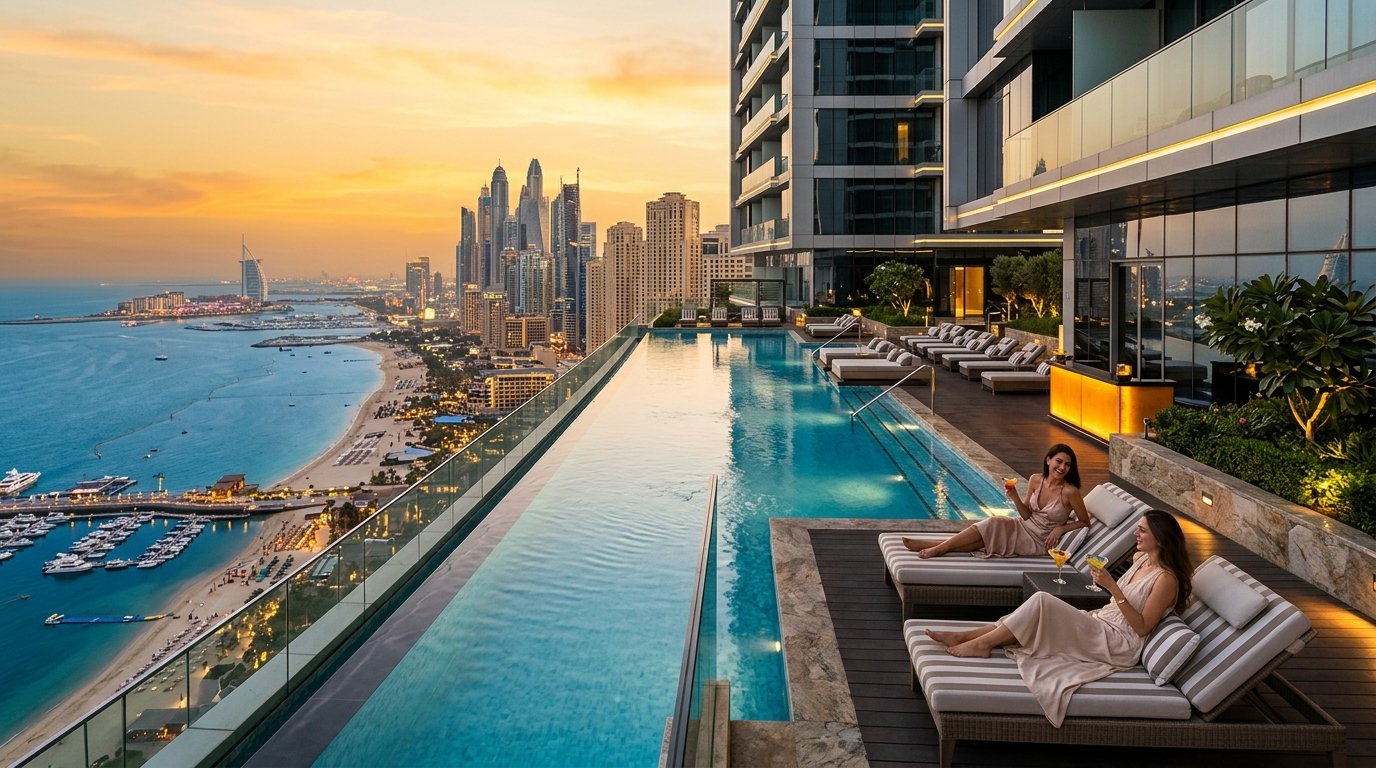
Dubai offers the highest risk-adjusted residential rental yields among the world’s leading tier-1 financial gateway cities, delivering gross cash returns ranging from 6.0% to over 10.2% annually. In stark contrast to mature Western real estate capitals—such as Central London, Manhattan, Paris, or Hong Kong, where compressed capitalization rates hover between 2.5% and 4.0% while being eroded by punitive income taxes and wealth levies—Dubai’s zero-tax fiscal environment allows property investors to retain 100% of their net operating rental income. However, optimizing cash-on-cash performance in 2026 requires rigorous strategic alignment: deciding whether to deploy assets into stable, long-term annual leases governed by RERA’s Ejari platform, or capture premium seasonal cash flows through licensed short-term holiday homes regulated by the Department of Economy and Tourism (DET / DTCM).
Executive Overview: Dubai as the World’s Premier Cash-Flow Real Estate Capital
Over the preceding 36 months, global real estate allocators have increasingly rotated capital out of low-yielding, heavily taxed Western jurisdictions and into Dubai. The underlying driver is straightforward mathematical efficiency. Driven by consistent population influx (adding over 100,000 corporate executives, tech founders, and affluent retirees annually), a booming international tourism economy welcoming over 18 million visitors per year, and proactive government residency frameworks like the 10-Year Golden Visa, tenant demand across Dubai continues to outstrip available rental supply.
Yet not all Dubai rental properties are created equal. A common error among novice investors is evaluating opportunities purely through headline “gross yields,” ignoring building service charges, cooling utilities, occupancy seasonality, and maintenance sinking funds. True financial mastery requires understanding Net Operating Income (NOI) and modeling empirical yields community by community. In this exhaustive research report, the asset management division at Vintage Luxe Real Estate provides an institutional-grade roadmap to maximizing rental yields across both long-term and short-term operating models in 2026.
The Mathematical Foundation: Gross Yield vs. True Net Operating Yield
To accurately compare real estate performance against equities, private debt, or sovereign bonds, investors must look beyond marketing brochures and calculate True Net Yield using standardized formulas:
1. The Standard Gross Rental Yield Formula
Gross Rental Yield is the most commonly cited marketing metric, expressed as:
Gross Rental Yield (%) = (Annual Gross Rental Income / Total Acquisition Cost) × 100
While useful for rapid initial screening, gross yield fails to account for statutory operational costs. For example, a 1-bedroom apartment purchased for AED 1,200,000 that generates AED 100,000 in annual rent exhibits an apparent gross yield of 8.33%. However, the investor’s actual pocketed return depends entirely on building operational overheads.
2. The True Net Yield (NOI) Formula
Net Yield reflects the actual cash-on-cash return generated after deducting all non-reimbursable property holding expenses:
True Net Yield (%) = [(Annual Gross Income − Building Service Charges − Maintenance Reserves − Insurance − Management Fees − Vacancy Provision) / Total Acquisition Cost] × 100
3. Dissecting Operating Expense Line Items in Dubai
- Mollak Building Service Charges: Audited and approved directly by RERA, service charges cover 24/7 security, concierge, common-area cleaning, elevator maintenance, and amenities (gyms, pools). These fees range from AED 3 to AED 7 per sq. ft. in suburban villa communities, up to AED 14 to AED 28 per sq. ft. in prime Downtown high-rises. In long-term leasing, service charges are paid strictly by the landlord.
- District Cooling (Chiller) Fees: In buildings that are not “Chiller Free,” air conditioning consumption is metered by providers like Empower or Tabreed. In long-term leases, the tenant pays consumption; in short-term holiday homes, the landlord must absorb cooling utility bills.
- Maintenance Sinking Fund & Repairs: Under standard Dubai tenancy contracts, minor repairs under AED 500 are handled by the tenant, while major structural and MEP repairs remain the landlord’s responsibility. Prudent investors budget 2% to 4% of annual rental revenue for maintenance reserves.
- Property Management Fees: Comprehensive long-term property management typically costs 5% to 8% of annual rent. Full-service DTCM short-term holiday home management (including housekeeping, linen turnover, dynamic pricing, and guest check-ins) ranges from 15% to 20% of gross revenue.
- Economic Vacancy Factor: Modeling a realistic 2 to 4-week turnover void between long-term tenant contracts protects financial forecasts.
Empirical Cash-Flow Modeling: Three Real-World Dubai Investment Case Studies
To demonstrate the exact math of net yield optimization, our advisory team has modeled three actual portfolio assets operating in Dubai’s current rental market:
Case Study A: High-Yield Cash Flow in Jumeirah Village Circle (JVC)
Asset: 1-Bedroom Luxury Apartment, 720 sq. ft., Brand New Tower by Binghatti.
Acquisition Price: AED 880,000 + 4% DLD fee (AED 35,200) + Trustee/Admin (AED 5,000) = AED 920,200 Total Investment.
Annual Gross Rent (Ejari Long-Term): AED 82,000 (collected in 4 cheques).
Mollak Service Charges: AED 14 / sq. ft. × 720 sq. ft. = AED 10,080.
Property Management (6%): AED 4,920.
Maintenance Reserve: AED 2,000.
Net Operating Income (NOI): AED 82,000 − AED 17,000 = AED 65,000.
True Net Cash Yield: (AED 65,000 / AED 920,200) = 7.06% Net ROI (8.91% Gross). This asset operates as an unencumbered cash-generating machine with virtually zero vacancy due to JVC’s immense tenant demand.
Case Study B: Canal-Front Holiday Home in Business Bay
Asset: 2-Bedroom Waterfront Residence, 1,250 sq. ft., Full Canal & Burj Khalifa View.
Acquisition Price: AED 2,800,000 + 4% DLD fee (AED 112,000) + Closing Fees = AED 2,930,000 Total Investment.
Furnishing & Staging CapEx: AED 75,000.
Gross Short-Term Revenue (DTCM Holiday Home): AED 365,000 (annualized average ADR of AED 1,250 at 80% occupancy).
DTCM Operator Management Fee (18%): AED 65,700.
Mollak Service Charges (AED 20/sq.ft): AED 25,000.
Utilities (DEWA + Chiller + Internet): AED 24,000.
Tourism Dirham & Platform Fees: AED 18,000.
Net Operating Income (NOI): AED 365,000 − AED 132,700 = AED 232,300.
True Net Cash Yield: (AED 232,300 / AED 3,005,000) = 7.73% Net ROI. Compared to an annual lease on the same unit (which would yield AED 190,000 gross / 5.2% net), the short-term model delivers a 250-basis-point yield premium.
Case Study C: Prime Family Villa in Dubai Hills Estate
Asset: 4-Bedroom Independent Villa, 3,800 sq. ft. Built-up Area.
Acquisition Price: AED 7,500,000 + Closing Costs = AED 7,850,000 Total Investment.
Annual Gross Rent: AED 480,000 (single corporate cheque).
Community Service Charges (AED 4.5/sq.ft): AED 17,100.
Maintenance & Landscaping Reserve: AED 12,000.
Net Operating Income (NOI): AED 450,900.
True Net Cash Yield: (AED 450,900 / AED 7,850,000) = 5.74% Net ROI. While the percentage yield is lower than an urban apartment, the owner captured over 18% annual capital appreciation, and executive corporate tenants typically sign 3-to-5 year uninterrupted tenancies.
Long-Term Annual Leasing Strategy: Legal Architecture & RERA Regulations
Long-term leasing remains the preferred strategy for conservative wealth preservers, sovereign funds, and passive international landlords seeking predictable, hands-off income with zero operational volatility:
1. Statutory Legal Framework: Dubai Law No. 26 of 2007 (Amended by Law No. 33 of 2008)
All residential and commercial leases in Dubai are governed by Law No. 26 of 2007 Regulating the Relationship between Landlords and Tenants in the Emirate of Dubai. This statute outlines the reciprocal rights and obligations of both parties, establishing contractual certainty and prohibiting unilateral landlord exploitation.
2. Mandatory Ejari Registration
Every tenancy contract must be formally registered on the government’s centralized Ejari system. An official Ejari certificate establishes the legal enforceability of the lease, allows the tenant to connect Dubai Electricity and Water Authority (DEWA) utilities, issue residential sponsorship permits, and access dispute resolution channels through the Dubai Land Department.
3. Rental Increase Restrictions: The RERA Smart Rental Index
Landlords cannot arbitrarily raise rents upon contract renewal. Under Decree No. 43 of 2013, annual rent increases are capped strictly according to the algorithmic RERA Smart Rental Index. Rent increases are permitted only if the existing contract rate falls below the official benchmark average for identical properties in the same micro-community:
- 0% Increase: If the current rent is up to 10% less than the community average benchmark.
- 5% Increase: If the current rent is 11% to 20% less than the community benchmark.
- 10% Increase: If the current rent is 21% to 30% less than the community benchmark.
- 15% Increase: If the current rent is 31% to 40% less than the community benchmark.
- 20% Maximum Increase: If the current rent is more than 40% below the community benchmark.
- Mandatory 90-Day Notice: Any proposed rent increase or contractual modification must be formally communicated to the tenant in writing at least 90 days prior to contract expiration.
4. Statutory Landlord Eviction Rules
Under Article 25 of Law No. 33 of 2008, a landlord may evict a tenant upon contract expiry only under four legally defined statutory justifications:
- The property owner wishes to demolish or reconstruct the property;
- The property requires comprehensive structural renovation that cannot be performed while the tenant occupies the premises;
- The property owner wishes to recover the property for personal use or first-degree next of kin, provided the owner does not own another suitable residential property in Dubai;
- The property owner wishes to sell the leased property on the open market.
In all four cases, the landlord must serve an official 12-Month Notarized Eviction Notice through a certified Dubai Court Notary Public or registered postal delivery.
The Rental Dispute Center (RDC): Fast-Track Judicial Enforcement
International property owners often fear getting trapped in multi-year tenancy litigations like those common in the UK, France, or New York. In Dubai, landlord-tenant disputes are resolved through the specialized Rental Dispute Center (RDC), established under Decree No. 26 of 2013:
1. Judicial Circuits and Expedited Timelines
The RDC operates as an independent judicial body located within the Dubai Land Department headquarters. It features three streamlined circuits: Reconciliation (attempting amicable mediation within 15 days), Court of First Instance (issuing legally binding judgments within 30 to 45 days), and Court of Appeal (reserved for claims exceeding AED 50,000). The process is 100% digital via the DLD portal.
2. Direct Execution on Bounced Cheques & Evictions
Under UAE Federal Decree-Law No. 14 of 2020 on Commercial Transactions, a bounced rental cheque functions as an official Executive Instrument. A landlord does not need to file a full-blown substantive civil lawsuit; instead, the landlord files directly with the RDC Enforcement Judge, who issues an immediate writ of execution, freezing the tenant’s bank accounts, placing a travel ban, and dispatching court bailiffs to enforce vacant possession within days.
Short-Term Holiday Homes (DTCM / Airbnb): Premium Yield Strategy
The short-term vacation rental and holiday home market in Dubai has expanded into a multi-billion-dirham institutional sector. Driven by Dubai’s status as the world’s most popular travel destination according to Tripadvisor Travellers’ Choice Awards, well-managed holiday homes generate significant yield premiums over annual leases:
1. Regulatory Licensing via DET / DTCM
Operating a short-term rental property in Dubai is strictly regulated by the Department of Economy and Tourism (DET / DTCM). Homeowners must obtain an official DTCM Holiday Home Permit (issued as a unique verifiable QR code that must be displayed at the entrance of the unit and on all digital booking portals like Airbnb, Booking.com, and VRBO). Alternatively, owners partner with licensed professional management operators like Vintage Luxe that hold master DTCM enterprise licenses.
2. Tourism Dirham Fees
DTCM mandates a nominal municipal guest surcharge—known as the Tourism Dirham Fee—ranging from AED 10 to AED 15 per bedroom per night (capped at 30 consecutive nights per booking). This fee is collected directly from the visiting guest by the operator and remitted monthly to the government portal.
3. Seasonality Dynamics: The Dubai Tourism Calendar
Success in short-term rentals requires navigating Dubai’s distinct seasonal revenue cycles:
- Peak Season (October to April): Characterized by idyllic winter weather (22°C to 28°C), major international events (COP summits, GITEX, Dubai World Cup, Art Dubai, New Year’s Eve), and astronomical holiday occupancy rates (85% to 95%). Nightly rates during December and January frequently surge by 200% to 400% above base levels.
- Shoulder Season (May and September): Moderate occupancy (65% to 75%) supported by regional Gulf tourism, executive business travelers, and school breaks.
- Summer Low Season (June to August): Warmer temperatures shift demand toward discounted long-stay corporate bookings, digital nomads, and GCC weekend travelers, with occupancy averaging 50% to 65% at reduced ADRs (Average Daily Rates).
4. Capital Expenditures: Luxury Furnishing & Design
To achieve top-tier ADRs and maintain superhost status, an off-plan or vacant property must be outfitted with professional interior design, hotel-grade mattresses, acoustic drapery, smart locks, and high-speed Wi-Fi. Initial furnishing budgets typically range from AED 35,000 to AED 50,000 for a 1-bedroom apartment and AED 60,000 to AED 90,000 for a 2-bedroom residence, amortized over a 3 to 4-year lifecycle.
Community-by-Community Empirical Yield Guide (2025–2026 Benchmarks)
Rental yields in Dubai are micro-market specific. Below is an authoritative breakdown across Dubai’s top 15 investment corridors, categorized by strategic performance profile:
Tier 1: Maximum Cash-Flow & High-Yield Hubs (8.0% to 10.2% Gross)
- Jumeirah Village Circle (JVC): The undisputed king of cash flow in Dubai. Average acquisition pricing ranges from AED 1,100 to AED 1,450 per sq. ft. Studio and 1-bedroom units generate gross yields between 8.4% and 10.2%, with net long-term yields consistently clearing 7.2% to 8.5% after service charges.
- Arjan & Dubai Science Park: High-growth master communities in Al Barsha South featuring modern mid-rise residential developments. Entry prices hover around AED 1,050 to AED 1,350 per sq. ft., delivering gross yields of 8.0% to 9.4% supported by massive demand from nearby hospitals and international schools.
- Dubai Silicon Oasis (DSO): The government-backed tech hub offering integrated residential communities. Gross yields range between 8.2% and 9.5% with affordable service charges and minimal vacancy periods.
- Dubai South (Aerotropolis Corridor): Anchored by the expansion of Al Maktoum International Airport (DWC) and Expo City. Yields average 8.0% to 9.2%, with astronomical long-term capital appreciation upside.
Tier 2: Prime Urban & Business Corridors (6.5% to 8.5% Gross)
- Business Bay: Bordering Downtown Dubai and the Dubai Water Canal, Business Bay attracts finance, consulting, and tech professionals from DIFC. Gross yields range from 7.2% to 8.6%. For short-term holiday homes with canal views, net yields can exceed 9.5% during peak winter travel months. Explore high-yield towers by Binghatti in Business Bay.
- Downtown Dubai: The global brand address of Dubai. While capital values per square foot are higher (AED 2,600 to AED 4,500), gross long-term yields hover at 6.4% to 7.6%. Downtown represents the premier location for short-term luxury holiday homes, where walking proximity to Dubai Mall and Burj Khalifa commands unmatched ADRs. View Emaar Downtown luxury inventory.
- Dubai Creek Harbour: Master-developed by Emaar, Creek Harbour yields 6.8% to 7.8% gross. As pedestrian retail promenades and marine transport links expand, tenant demand from young professional families has surged.
- Dubai Marina & JBR: Established waterfront hubs with high secondary liquidity. 1 and 2-bedroom waterfront apartments generate 6.8% to 7.9% gross yields, with holiday homes capturing robust summer beach tourism.
Tier 3: Suburban Gated Villa & Family Enclaves (5.8% to 7.2% Gross)
- Dubai Hills Estate: Flagship Emaar master development featuring an 18-hole golf course and regional park. Villa and townhouse gross yields range from 6.0% to 7.2%, with zero vacancies among executive expatriate families.
- Sobha Hartland (MBR City): Located 10 minutes from Downtown with dual British curriculum academies. Delivers gross yields of 6.5% to 7.5% alongside premium craftsmanship and low maintenance outlays. Discover Sobha Hartland forest villas.
- Tilal Al Ghaf: Resort master community centered around the crystal lagoon. Yields average 6.0% to 7.0% with substantial capital appreciation.
Comparative Yield Matrix: Long-Term vs. Short-Term Net ROI Table
To assist in portfolio structuring, the analytical team at Vintage Luxe has synthesized transactional performance benchmarks across Dubai’s top 10 investment communities:
| Community Name | Avg Price / Sq. Ft. (AED) | Avg Service Charge (AED/sq.ft) | Gross Rental Yield (%) | Net Long-Term Yield (%) | Net Short-Term (DTCM) Yield (%) | Optimal Operational Strategy |
|---|---|---|---|---|---|---|
| Jumeirah Village Circle (JVC) | AED 1,150 – 1,450 | AED 12 – 16 | 8.4% – 10.2% | 7.2% – 8.6% | 7.5% – 8.8% | Long-Term Annual Leases (Yield Champion) |
| Business Bay | AED 1,950 – 3,200 | AED 16 – 22 | 7.2% – 8.6% | 6.2% – 7.4% | 7.8% – 9.4% | Short-Term Holiday Home (Canal / Skyline Views) |
| Downtown Dubai | AED 2,600 – 4,500 | AED 20 – 28 | 6.4% – 7.6% | 5.4% – 6.4% | 7.5% – 9.2% | Short-Term Luxury Vacation Rental |
| Dubai Marina | AED 1,750 – 2,800 | AED 15 – 20 | 6.8% – 7.9% | 5.8% – 6.8% | 7.2% – 8.6% | Hybrid (Short-Term Winter / Long-Term Corporate) |
| Dubai Creek Harbour | AED 1,750 – 2,500 | AED 16 – 21 | 6.8% – 7.8% | 5.8% – 6.8% | 6.4% – 7.5% | Long-Term Corporate Expat Leases |
| Dubai Hills Estate (Apts) | AED 1,850 – 2,500 | AED 15 – 19 | 6.4% – 7.4% | 5.5% – 6.5% | 6.0% – 7.2% | Long-Term Professional Tenant Leases |
| Dubai Hills Estate (Villas) | AED 2,200 – 3,200 | AED 4 – 7 | 6.0% – 6.8% | 5.5% – 6.2% | N/A (Gated HOA) | Multi-Year Family Tenancies (Low Opex) |
| Sobha Hartland (MBR City) | AED 2,100 – 3,100 | AED 18 – 24 | 6.6% – 7.5% | 5.6% – 6.5% | 6.8% – 8.0% | Long-Term Quality Expat Families |
| Palm Jumeirah (Luxury Apts) | AED 3,500 – 6,500 | AED 22 – 32 | 5.5% – 6.8% | 4.4% – 5.4% | 7.0% – 8.8% | Ultra-Luxury Holiday Let / Private Beachfront |
| Dubai South (Expo Corridor) | AED 950 – 1,350 | AED 10 – 14 | 8.0% – 9.5% | 7.0% – 8.4% | 6.2% – 7.4% | Long-Term Aviation & Logistics Housing |
Actionable Strategies: How to Maximize Rental Premiums in Dubai
Whether operating an annual lease or a luxury holiday home, strategic enhancements can increase gross rental yields by 150 to 250 basis points:
1. Professional Interior Staging & Biophilic Design
Modern affluent tenants in Dubai actively seek Scandinavian minimalism, warm oak joinery, natural stone textures, and biophilic indoor plants. Furnished units that feature high-end designer aesthetics rent within 48 hours and command a 15% to 25% pricing premium over empty or standard builder-grade apartments.
2. Installing Smart Home Automation
Keyless smart locks (Yale, Nuki, or August), smart thermostats (Nest or Ecobee), and automated ambient lighting provide seamless convenience for tenants while reducing energy utility waste. For holiday home operators, smart locks eliminate key handovers, enabling 24/7 autonomous guest self-check-ins.
3. Flexible Cheque Structuring in Long-Term Leases
In Dubai, annual rent is traditionally settled via post-dated cheques (customarily 1, 2, or 4 cheques per year). Landlords willing to accept 4 or 6 cheques rather than a single lump-sum cheque can routinely negotiate a 5% to 8% higher annual contract rate while maintaining full legal security under UAE cheque enforcement laws.
4. Dynamic Pricing Algorithms for Holiday Homes
Top holiday home managers utilize AI-powered dynamic pricing software (such as PriceLabs or Wheelhouse) that adjusts nightly rates in real time based on flight arrival volumes, hotel occupancy rates across the district, major arena concerts, and weather patterns. Dynamic adjustments ensure maximum ADR during peak weekends without sacrificing mid-week occupancy.
Frequently Asked Questions: Dubai Rental Yields & Property Management
Is rental income taxed in Dubai?
No. Individual property owners residing in the UAE or overseas pay 0% personal income tax on rental proceeds generated in Dubai. Rental yields are received entirely free of municipal withholding taxes.
Can I switch my property from a long-term lease to a holiday home?
Yes. Upon legal termination or expiration of an existing Ejari tenancy contract (following statutory RERA notice periods), you can register the property with DTCM, furnish the unit, and transition it into a luxury short-term rental.
How are rental payments collected from tenants?
In long-term leasing, payments are made via UAE post-dated cheques or automated bank direct debit through the Central Bank of the UAE’s UAEDDS system. In short-term holiday homes, guest booking payments are processed securely via international credit cards and transferred directly to your account.
What happens if a long-term tenant fails to pay rent?
Dubai enforces strict landlord protections through the Rental Dispute Center (RDC). If a tenant’s rental cheque bounces or payment is overdue by 30 days, the landlord serves a formal 30-day notary notice. If arrears are not settled, the RDC issues an expedited eviction order enforceable by police, and bounced cheques are subject to direct civil execution without protracted court litigation.
What is the average occupancy rate for Dubai holiday homes?
Across prime lifestyle districts like Downtown Dubai, Dubai Marina, and Palm Jumeirah, professional operators maintain annualized average occupancy rates between 72% and 82%, peaking at 90% to 95% between October and April.
Who handles maintenance emergencies for overseas owners?
Accredited property management agencies like Vintage Luxe manage all maintenance calls, contractor dispatching, and emergency plumbing or electrical repairs 24/7, providing overseas owners with monthly digital accounting statements and photographic audits.
Maximize Your Real Estate Returns with Vintage Luxe Asset Management
Achieving superior rental returns in Dubai requires more than just acquiring prime real estate; it demands intelligent asset management, meticulous tenant vetting, rigorous expense auditing, and sophisticated yield optimization.
At Vintage Luxe Real Estate, our full-service property management division oversees high-performing portfolios across Dubai’s top master communities. Whether you require hands-off annual tenant administration under Ejari or an elite, high-yield DTCM holiday home operation with five-star hotel concierge services, we protect your property and maximize your net cash flow.
Contact our property management specialists today at Vintage Luxe Real Estate to request a complimentary rental yield audit for your Dubai property, or explore our curated high-yield investment properties.



Comments are closed